
Short Story
Executive Summary
-
The Concept: A unified manufacturing hub producing daily essentials. The water division provides steady, high-volume cash flow, while the cosmetics division drives brand equity and premium returns.
-
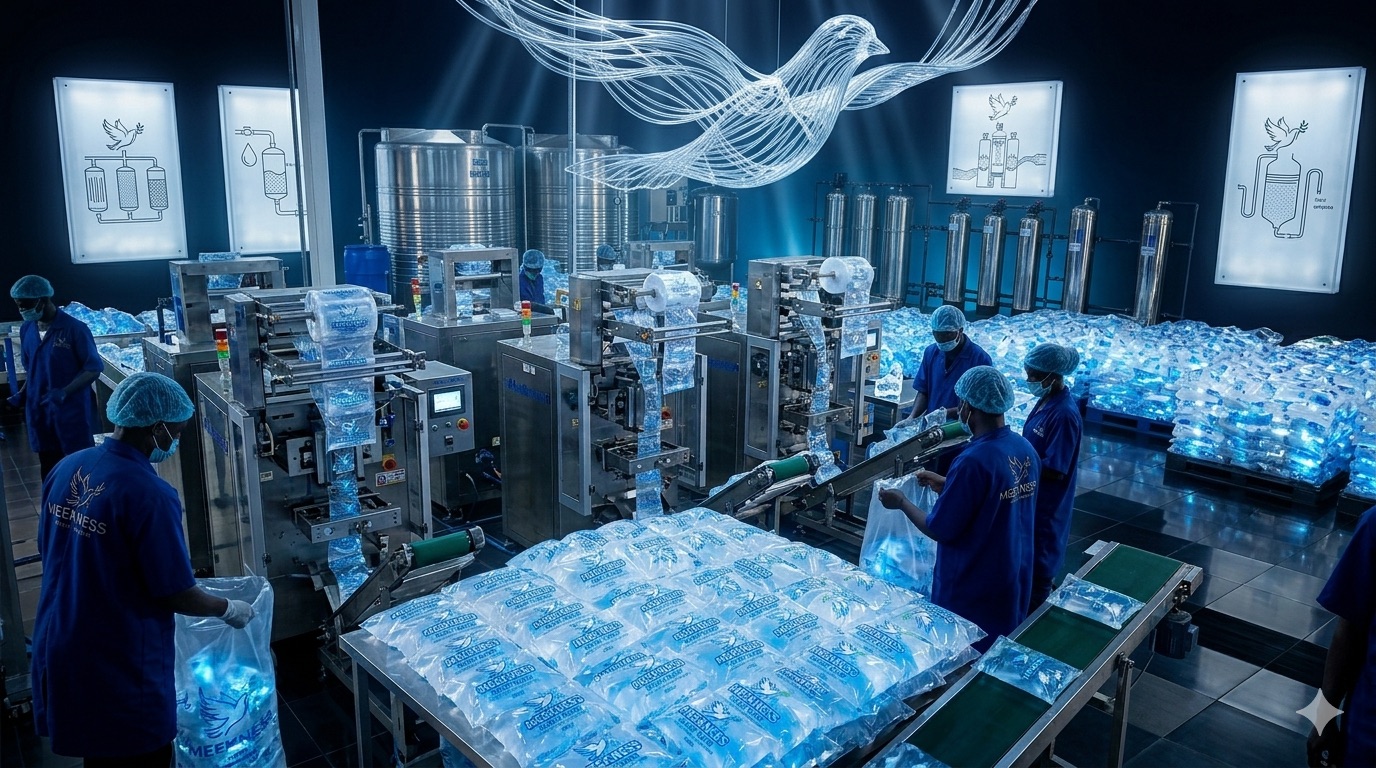
Operational Synergy: Both lines utilize shared liquid-handling technology, high-grade water filtration, and a centralized distribution network. This “shared-service” model slashes overhead costs and maximizes equipment utility.
-
Market Position: Targeting the mass market with affordable, purified sachet water while capturing the growing personal care segment through scientifically formulated skincare and detergents.
-
Funding Goal: Investment will be directed toward high-speed automated packaging lines, raw material procurement, and scaling a dual-track logistics fleet to reach both local vendors and premium retailers.
Why This Wins
-
Risk Mitigation: The consistent demand for water protects the business during market fluctuations, acting as a financial safety net for the cosmetic launch.
-
Resource Efficiency: Purified water is a primary ingredient in cosmetics (lotions, liquid soaps). Producing it in-house lowers the “Cost of Goods Sold” for the beauty line.
-
Logistics Edge: A single delivery truck can carry both high-volume water crates and high-value cosmetic cartons, doubling the revenue generated per trip.
Sachet water and Cosmetic Project needs hand togther
-
₦5,000,000.00
Funding Goal -
₦0.00
Funds Raised -
Campaign Never Ends
Campaign End Method

Campaign Story
1. The Value Proposition: “The Daily Essential Suite”
Investors value businesses that cover multiple consumer touchpoints. By merging these, you are presenting a diversified portfolio:
-
Sachet Water: High turnover, recession-proof, and provides consistent daily cash flow.
-
Cosmetics: Higher profit margins, brand loyalty, and long-term scalable growth.
2. Integrated Funding Strategy
Instead of seeking separate loans or investments, present them as a single Manufacturing & Distribution Hub.
-
Shared Infrastructure: Highlight how both projects can share a warehouse, delivery vehicles, and even administrative staff to reduce “Burn Rate” (monthly expenses).
-
Water as a Foundation: Use the consistent revenue from the water business to fund the initial marketing and raw material costs of the cosmetic line.
3. Key Financial Drivers
To attract serious funding, your proposal should include:
| Component | Focus Area | Investor Appeal |
| Capital Expenditure (CAPEX) | High-speed packaging machines for water; Mixing and filling vats for cosmetics. | Asset-backed investment. |
| Operational Expenditure (OPEX) | Shared logistics and electricity (generator/solar). | Efficiency and cost-saving. |
| Market Reach | Direct-to-consumer and wholesale distribution. | Scalability. |
4. Resource Optimization
Since both projects involve chemical formulation and liquid handling, you can save costs by:
-
Water Treatment: Utilizing the same high-grade filtration system for sachet water and as a purified base for cosmetic formulations (lotions, liquid soaps).
-
Regulatory Compliance: Processing NAFDAC or local regulatory approvals simultaneously to save on administrative time and fees.
5. Potential Funding Sources
-
Development Banks: Many regional banks offer lower interest rates for manufacturing and “Essential Goods” sectors.
-
Private Equity/Angels: Look for investors interested in the FMCG (Fast-Moving Consumer Goods) space who value technical expertise in formulation.
-
Trade Credit: Negotiate with raw material suppliers for cosmetics to provide ingredients on 30- or 60-day credit lines, using water sales as a guarantee.
Note: When presenting this to investors, ensure you have a clear Technical Benchmarking Study ready. Showing how your products (like a specific liquid soap or skincare item) perform against established market leaders adds significant credibility to your request.
